

Have you ever looked in the mirror and noticed that your skin doesn't look or feel the way it used to?
Perhaps it's becoming drier, less firm, or more sensitive. Maybe you're noticing new wrinkles, age spots, changes in texture, or breakouts that seem to appear out of nowhere.
It's easy to assume these changes are simply part of getting older. And while aging naturally affects our skin, there's more to the story.
Your skin is your body's largest organ. It serves as a protective barrier, helps regulate temperature, and plays an important role in immune defense.
It is also influenced by several factors, including hormonal changes, genetics, nutrition, sun exposure, sleep, and lifestyle.
This November, in recognition of National Healthy Skin Month, let's look beyond skincare products and explore the connection between healthy skin, hormones, and overall wellness.
As we get older, our skin naturally undergoes structural changes.
Collagen and elastin help maintain skin's firmness, strength, and elasticity. Over time, their production and structure change, contributing to:
Some of these changes are part of the natural aging process, while others are influenced by environmental and lifestyle factors.
One major contributor is cumulative sun exposure.
Ultraviolet (UV) radiation can accelerate skin aging, a process known as photoaging. It contributes to wrinkles, uneven pigmentation, and loss of skin elasticity.
The takeaway? Aging is natural, but how we care for our skin throughout life can influence how it ages.
Hormones influence much more than reproductive health. They also play a role in several processes that affect our skin.
Estrogen contributes to collagen production, skin thickness, hydration, and elasticity.
During perimenopause and menopause, estrogen levels fluctuate and eventually decline. These changes can contribute to noticeable differences in skin health, including:
This is one reason women may notice changes in their skin during the menopause transition, even when their skincare routine hasn't changed.
Testosterone also influences skin physiology, including oil production, hair growth, and skin characteristics.
Hormonal changes associated with aging can influence skin and hair, although these changes are not exclusive to testosterone levels.
For both men and women, understanding hormonal changes is part of understanding the bigger picture of healthy aging.
An important note: Hormone replacement therapy is not recommended solely to improve skin appearance. Hormone therapy decisions should be based on an individual's symptoms, medical history, risks, and treatment goals.
Your skincare routine matters, but what happens outside the bathroom matters, too.
Several everyday habits influence skin health.
Your skin needs adequate nutrients to maintain its structure and support normal repair processes.
A balanced diet that includes:
can help provide the nutrients your body needs to maintain healthy skin.

Sleep is an important part of your body's recovery and repair processes.
Consistently poor sleep can affect skin appearance and may contribute to changes associated with skin aging.
Ongoing stress affects multiple systems in the body.
Stress-related hormonal changes can influence inflammatory pathways and may aggravate certain skin conditions.
Making time for relaxation, movement, and restorative sleep can support overall health, including skin health.
One of the most important things you can do for your skin is protect it from excessive UV exposure.
Dermatologists recommend:
These habits help protect against premature skin aging and reduce skin cancer risk.
Your skin can sometimes provide clues about changes happening elsewhere in your body.
For example:
However, skin changes alone cannot diagnose a hormone imbalance, nutritional deficiency, or metabolic condition.
If you notice persistent, unexplained, or concerning changes, consult an appropriate healthcare professional. A dermatologist can evaluate skin concerns, while your primary healthcare practitioner can investigate possible underlying medical contributors when appropriate.
And remember: A changing mole, a new growth, or a sore that doesn't heal should not automatically be dismissed as a normal sign of aging.
At Signature Wellness, we believe that health deserves to be viewed as a whole.
When discussing healthy aging, it is important to consider how different aspects of health may interact.
These may include:
Hormonal health: Understanding how age-related hormonal changes may influence the body.
Metabolic health: Considering factors such as blood sugar regulation and overall metabolic function.
Nutrition: Evaluating dietary patterns and whether nutritional needs are being met.
Sleep and stress: Recognizing their influence on overall health and well-being.
Preventive care: Keeping up with appropriate screenings and addressing changes rather than ignoring them.
A functional medicine approach considers these interconnected factors alongside conventional medical evaluation.
It isn't about assuming that every skin concern has an internal cause. It's about asking thoughtful questions and understanding the individual behind the symptoms.
You don't need an expensive skincare collection or a complicated wellness routine to get started.
Here are five practical habits worth prioritizing:
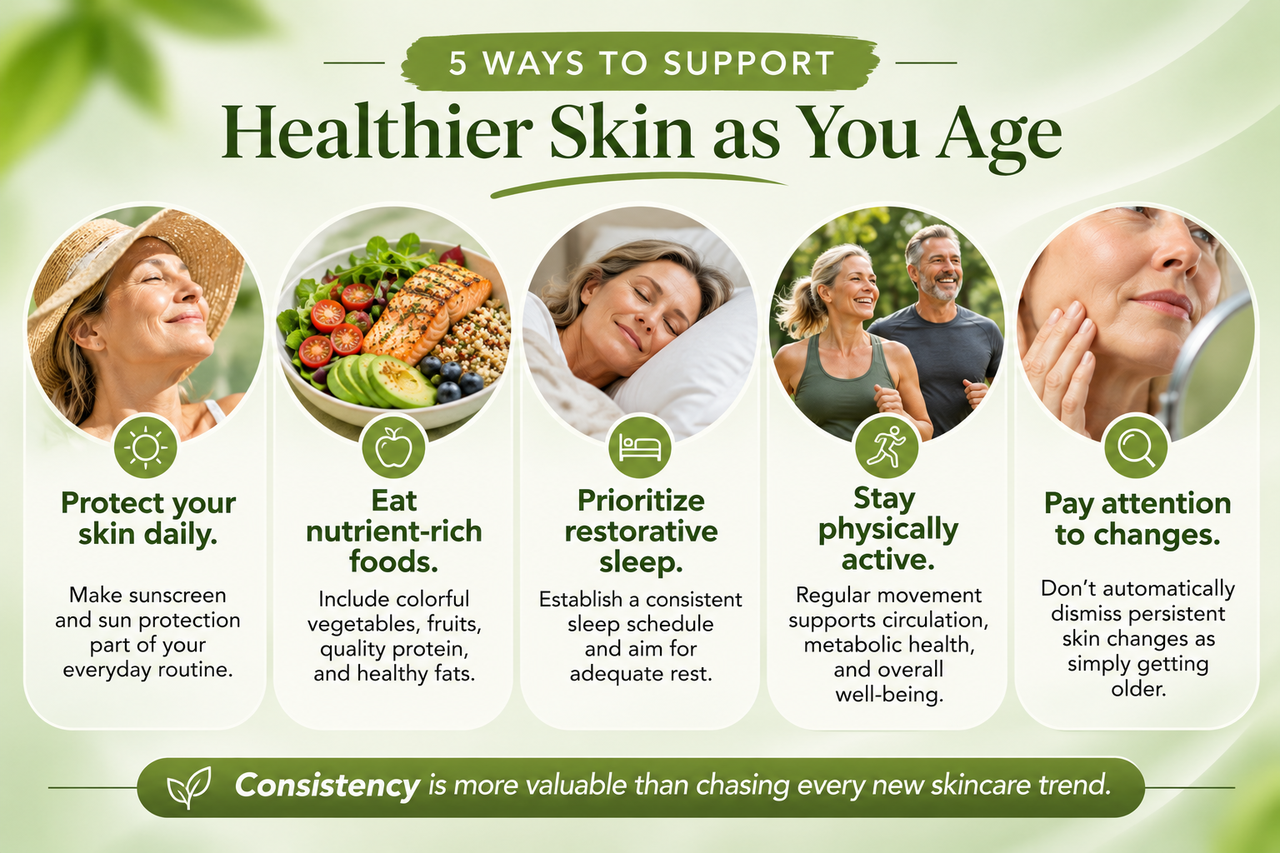
Consistency is more valuable than chasing every new skincare trend.
Aging is inevitable, but taking care of your health should never be an afterthought.
Your skin deserves attention, just like your hormones, metabolism, sleep, and overall well-being.
Instead of focusing only on what you see in the mirror, consider what your body needs to function and feel its best.
Healthy aging isn't about looking 20 forever. It's about supporting your body, maintaining your quality of life, and feeling confident at every stage.
Ready to take a closer look at your health?
At Signature Wellness, we believe in looking beyond individual symptoms and considering the bigger picture of your well-being.
Whether you're navigating hormonal changes, interested in optimizing your health as you age, or experiencing symptoms that haven't been fully explained, we're here to start a conversation.
DM us to schedule your FREE discovery call. Let's talk about your health goals and explore the next steps in your wellness journey.
Stay updated on our news and events! Sign up to receive our newsletter.